
Dog Training for Sensitive, Anxious, and Reactive Dogs
A loose dog rounds the parked car. Twenty feet. And everything you’ve studied — the distance work, the timing, the calm bright voice — vanishes as if it never existed. Your shoulders climb. Your breath stops. Your hands close on the leash. You knew all of it ninety seconds ago. Now you can’t reach a single piece of it.
Here’s what two days in this room will show you: the reason your most practiced skills disappear under pressure has nothing to do with how much you know — and how a workshop with no dogs present can finally close the gap that years of training never could.
A bark begins before the bark.
A lunge begins before the lunge.
A reaction begins before the reaction.
A decision begins before the movement.
They fail for a reason almost no one names out loud: under pressure, they notice too late, decide too late, move too late, and recover too late. The moment everyone can see — the loud one, the embarrassing one, the one you’ll replay all afternoon — is the last chapter of a story that began in silence, seconds earlier, in a body that answered before the mind was even invited into the room.
You’ve felt it. The walk that “came out of nowhere.” The skill that was right there a minute ago and gone when you reached for it. And then the quiet verdict afterward: something must be wrong with me.
There’s nothing wrong with you. There’s something missing — and it isn’t more information. Keep reading; the thing that’s missing has a name, and it’s far more fixable than you’ve been led to believe.
For years we taught one principle to every handler: a dog cannot learn when its nervous system tips over threshold. The sit doesn’t vanish. The access to the sit vanishes. Protect first, learn later — the oldest wisdom in biology.
Then one ordinary afternoon the principle turned around and looked back at us. If dogs can’t reach what they know under pressure… what if you can’t either?
Everything you’ve learned is software. Your nervous system is the operating system. And when the body goes over threshold, it closes the door — not to punish you, to protect you — and the finest software in the world can’t open behind a locked door.
So the goal was never more software. You almost certainly already own more than you can use. The goal is installation: the slow, embodied work of making what you know reachable in the exact moment the body would rather slam the door and run. That work is what these two days are built to do — and we do it without a dog in the room, on purpose. The next section shows you why that’s the whole point.
Not perfectly. Sooner. These are four ways of arriving a little earlier than you used to — in your body, where it counts.
Notice the first signals of pressure — in yourself, in the environment, in the space between you and your dog — before they become the bark.
Choose from a small, clear set of options before the moment becomes too expensive to fix.
Act in sequence rather than in reaction. Word. Breath. Movement. Clean before fast — always.
Return to awareness after a mistake, an interruption, or a moment that got away from you. Recovery is a skill, not a failure.
The moment before the moment is where choice still exists.
We train the human side of the leash before a dog is ever added. You’ll experience, in your own body, the same principle you’ve been taught to offer your dog: a nervous system under pressure loses access — so we train access.
You’ll learn to separate fact from story, signal from interpretation, pressure from failure. Map your own personal whisper before the shout — the breath, the shoulders, the grip that move first.
The seven days between sessions are part of the curriculum, not a pause in it. You’re not asked to improve — only to notice beginnings, in yourself, in others, in your dog. One question travels with you: What changed first?
Seeing was the beginning. Now you build the bridge: from awareness into a clear choice, from choice into a clean move, from a mistake into a fast recovery — rehearsed under rising, real pressure.
Not theory. Not performance. Not perfection. You won’t always make it across cleanly — and that’s expected. Recovery is part of the bridge, not a detour from it.
Verbatim reviews from Google, left by clients across the practice — day training, the 90-Day program, and private work. Field Lessons grew out of the same method.
When we started with Lorrie, we couldn’t walk our dogs on leash — they pulled so much! Now they are a treat to walk. Their recall is better, anxiety is lower, and our bond is stronger. 100% worth it.
Lorrie is such an incredible trainer! She has a different approach — all about calming the nervous system and involving play. She helped me connect with my rescue pup on a deeper level. Lorrie is now Auntie Lorrie as my dog LOVES going for his sessions.
Lorrie is an incredible, compassionate trainer. She connects with the dog at a level I did not even know existed. Her instruction was explicit and spot on — the results were immediate! My pup and I have a bond now that is strong and will continue to grow.
Lorrie’s expertise in teaching dogs to self-regulate and become responsive instead of reactive is the most unique and impactful part of her practice. Our dog is TRANSFORMED and it is due entirely to making the decision to work with Lorrie at Coaching Canine Companions!!
After the first day of training my 4 year old Australian Shepherd walked with a loose leash after years of pulling. Her training is methodical, results oriented, and aligns with the dog owner’s goals. My dog clearly looked forward to seeing her. Highly recommend.
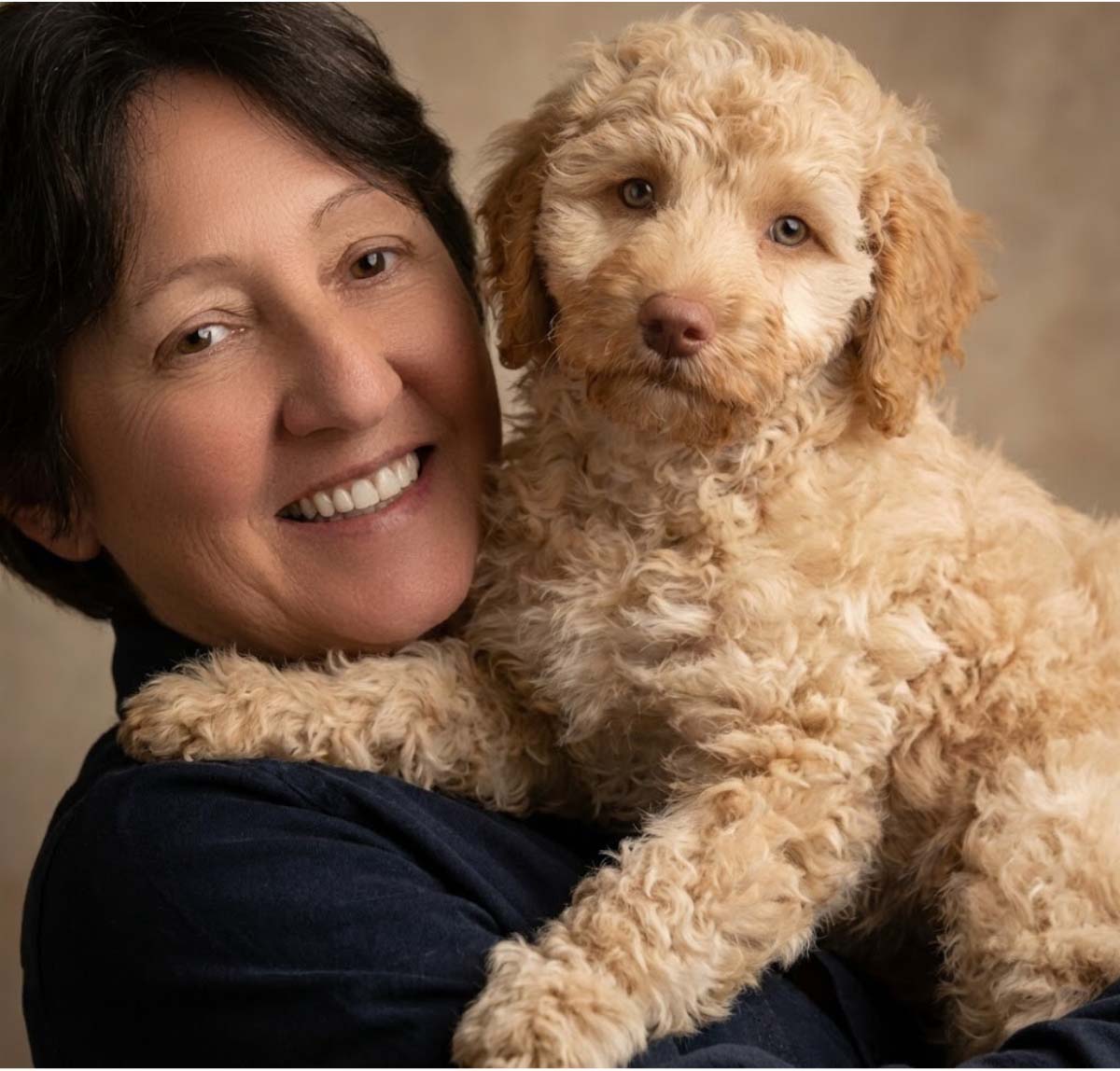
For most of my life I watched dogs the way most people do — waiting for the thing to happen so I could respond to it. The pull. The lunge. The freeze. Over years and ten thousand walks, the dogs taught me to look earlier: to watch the air before the storm, to notice the whisper the body makes long before behavior learns to shout.
When I finally learned to extend that same nervous-system-first grace to the people holding the leash — not just their dogs — the whole of this work came alive. That’s what these two days are. Not a new technique. A principle, allowed at last to point in both directions.
Dog Behavior Coach · Coaching Canine Companions
Two-Day No-Dog Embodiment Lab
Held on-site at Coaching Canine Companions · North Kingstown, RI · Limited to 8 handlers
No online checkout, no pressure. We begin with a conversation — a short call to see whether the next group is the right fit for you and your dog.
On purpose. When your own dog is present, your nervous system is already managing them, and you can’t feel your own beginnings clearly. We train the human side of the leash first, in a calm room, so that the access you build is genuinely yours — then it travels home to every walk you take.
Almost certainly you already know more than you can reach under pressure. This isn’t more information — it’s installation. We make the things you already know available in the exact moment the body would rather close the door. Most experienced handlers find this is the layer they’ve been missing all along.
This is not behavior modification, and it won’t replace your hands-on dog work. It’s the missing installation layer beneath all of it. When you can see earlier and stay regulated, your dog feels it instantly — and the work you’re already doing with them starts to land differently.
You can’t do the week wrong. You’re not asked to improve or perform — only to notice. “I kept forgetting to look” is a real, useful observation. The whole workshop runs on curiosity over judgment and recovery over perfection.
No special experience required. Bring yourself, something to write with, and a willingness to notice. Everything else — including your Student Guide — is provided.
We’re not here to make you a perfect handler. We’re here to help you trust yourself sooner.
Because the moment before the moment is still there, every day, waiting patiently to be noticed. Now you can learn how to find it.
Let’s Discuss If This Is Right for YouSmall groups · Limited to 8 handlers · On-site in North Kingstown, RI